

80s Living Room Decor Trends: The Complete Guide to Authentic 1980s American Interior Design
There is something undeniably nostalgic about stepping into an authentic 1980s American living room. It instantly transports you to an era when families gathered around a large CRT television to watch their favorite sitcoms, music videos filled the air from oversized stereo systems, and homes proudly reflected personality rather than minimalism. The 1980s were bold, colorful, optimistic, and unapologetically expressive. Unlike today's trend toward clean lines and understated décor, the decade embraced abundance. More color, more texture, more patterns, more comfort, and more glamour defined nearly every American living room.

Today, 80s living room decor is making a remarkable comeback. Interior designers are rediscovering the charm of curved furniture, brass accents, glass block walls, floral upholstery, pastel color palettes, Memphis-inspired patterns, and luxurious layered interiors. Homeowners are once again embracing the warmth and character that made 1980s homes feel so inviting.
Whether you're restoring a vintage home, decorating a retro-inspired apartment, or simply looking for inspiration from one of America's most iconic design decades, this complete guide explores everything you need to know about authentic 1980s living room decor.
Why 1980s Living Room Decor Is Trending Again
Every generation eventually rediscovers the beauty of past decades, and the 1980s are currently enjoying a major revival. While many people associate the decade with neon lights, arcade games, and pop culture icons, the influence of 1980s interior design goes far beyond nostalgia.
Modern homeowners have grown tired of spaces that sometimes feel overly minimal or sterile. The warmth, comfort, and personality found in 80s living room design offer a refreshing alternative. Instead of empty shelves and monochromatic color palettes, 1980s homes celebrated family photographs, lush indoor plants, decorative accessories, richly textured fabrics, and furniture designed for real everyday living.
Designers today often blend authentic 1980s elements with modern functionality, creating interiors that feel nostalgic yet sophisticated.
The Story Behind American Living Rooms in the 1980s
To truly understand 1980s home decor, it's important to understand the lifestyle of the era. Throughout the United States, suburban neighborhoods expanded rapidly. Families spent more evenings at home as cable television, VHS movies, and home entertainment systems became central to everyday life.
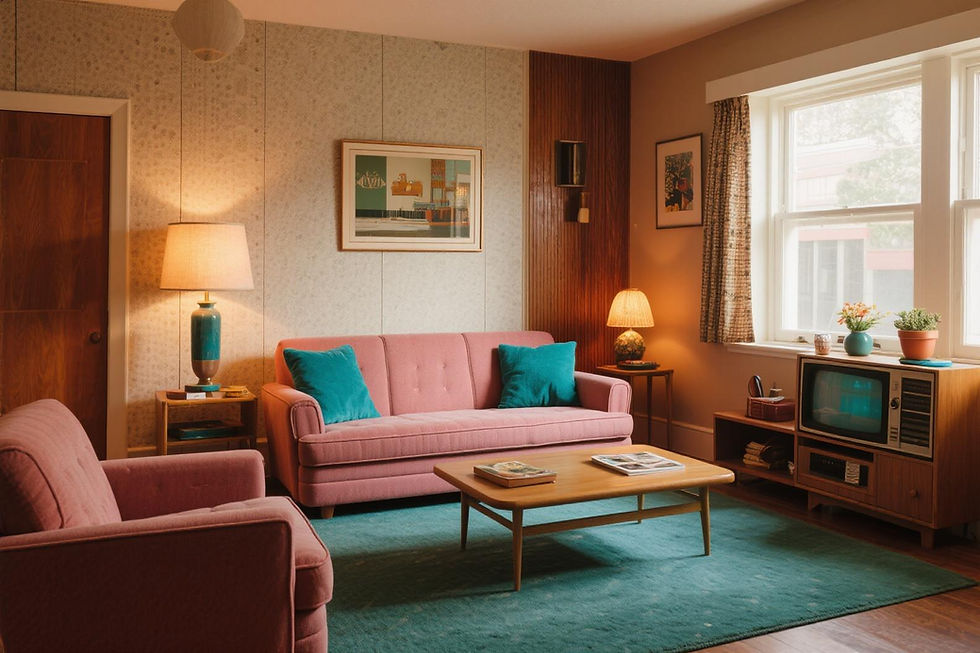
The living room evolved into much more than a formal sitting area. It became the heart of the home—a place for movie nights, holiday gatherings, birthday celebrations, and conversations with friends and neighbors.
As technology advanced, furniture evolved to accommodate larger televisions, stereo receivers, cassette collections, VCRs, and display cabinets. Living rooms became larger, more comfortable, and filled with furnishings that reflected personal success and family pride.
The Signature Color Palette of 1980s American Interiors
One of the defining characteristics of 80s living room decor was its fearless use of color. Unlike the earthy browns and oranges of the 1970s, the 1980s introduced softer pastels alongside dramatic accent colors.

Dusty pink, peach, mauve, seafoam green, mint, powder blue, cream, taupe, and soft lavender became incredibly popular throughout suburban America. These colors created bright yet relaxing interiors that felt cheerful without overwhelming the space.
Luxury homes often incorporated deeper jewel tones such as emerald green, burgundy, navy blue, and black, complemented by polished brass finishes and mirrored furniture.
Meanwhile, designer interiors embraced the growing influence of the Memphis Design movement, introducing electric blue, hot pink, bright yellow, vivid turquoise, and bold geometric combinations that felt futuristic and artistic.
Curved Furniture Changed Everything
Perhaps no single element defines late 1980s interior design more than curved furniture.
The decade represented a dramatic departure from the rigid rectangular furniture that dominated previous generations. Sofas became softer, larger, and more sculptural. Crescent-shaped sectionals stretched across living rooms, while rounded coffee tables and circular ottomans encouraged relaxed social interaction.

These sweeping curves created a sense of movement throughout the room, making even large living spaces feel welcoming and comfortable.
Popular upholstery materials included chenille, velvet, leather, microfiber, and luxurious woven fabrics that added both texture and warmth.
Large rolled arms, deep seat cushions, oversized back pillows, and plush upholstery became symbols of comfort and modern American living.
Floral Fabrics Became a National Obsession
One of the most recognizable features of authentic 1980s living rooms was the widespread use of floral prints.

Inspired by English country style, floral chintz fabrics appeared almost everywhere. Sofas, armchairs, curtains, cushions, lampshades, wallpaper, and even table linens showcased oversized roses, peonies, botanical patterns, and colorful garden-inspired designs.
While modern interior design often limits patterned fabrics to small accessories, the 1980s embraced floral prints on a much larger scale. Entire living rooms coordinated matching sofas, draperies, wallpaper, and decorative pillows to create cohesive and richly layered interiors.
The result was warm, inviting spaces that celebrated comfort rather than restraint.
Brass Accents Added Instant Luxury
If wood represented tradition, brass represented luxury during the 1980s.

Highly polished brass became one of the decade's signature materials. It appeared in floor lamps, chandeliers, coffee table frames, wall sconces, fireplace tools, cabinet hardware, mirror frames, magazine racks, and decorative sculptures.
Glass and brass combinations became especially popular, creating elegant coffee tables with smoked glass tops supported by gleaming brass frames.
Unlike today's preference for matte finishes, homeowners proudly displayed reflective surfaces that caught natural sunlight and evening lighting, making interiors feel brighter and more glamorous.
Glass Block Walls Brought the Future Home
Few architectural features are more closely associated with late-1980s homes than glass block walls.
Glass blocks provided an innovative solution for homeowners who wanted both natural light and privacy. Interior designers incorporated them into entryways, staircases, room dividers, bathrooms, and contemporary living rooms.
Their distinctive geometric appearance perfectly complemented the futuristic optimism that defined much of late-1980s architecture.
Today, glass blocks remain one of the most recognizable design elements of authentic retro homes.
The Rise of Memphis Design
Although not every American home adopted Memphis Design, its influence spread widely throughout the decade.

Originating in Italy, Memphis Design challenged traditional interior decorating by introducing playful asymmetry, geometric shapes, bold color combinations, abstract patterns, and unexpected materials.
Checkerboard prints, zigzags, spirals, triangles, squiggles, animal prints, and graphic artwork found their way into wallpapers, cushions, ceramics, rugs, and decorative accessories.
Even homeowners who preferred traditional interiors often incorporated one or two Memphis-inspired pieces to modernize their spaces.
Entertainment Centers Became the Living Room's Centerpiece
No discussion of authentic 1980s living room decor would be complete without mentioning the massive entertainment center.

These oversized oak wall units dominated American living rooms throughout the decade.
They housed large CRT televisions, VHS players, cassette decks, stereo receivers, vinyl records, speakers, family photo albums, decorative books, collectibles, and treasured souvenirs.
The entertainment center symbolized both technological advancement and family togetherness.
Instead of mounting televisions on walls as we do today, families proudly displayed their entertainment systems as the focal point of the room.
Layered Window Treatments Completed the Look
Window treatments during the 1980s were intentionally elaborate. Rather than simple curtains, homeowners layered sheers beneath heavy drapes, often adding decorative valances, swags, tiebacks, tassels, and fringe.
Floral fabrics remained popular, although solid-colored draperies in pastel shades also appeared frequently. These layered textiles softened natural light while adding richness and visual depth to living spaces.
Indoor Plants Created Living Architecture
The 1980s embraced indoor greenery unlike almost any previous decade.

Large Ficus trees, Kentia palms, Areca palms, Rubber plants, Boston ferns, Philodendrons, and Spider plants became permanent residents in American living rooms.
These lush plants softened architectural lines, filled empty corners, improved visual balance, and reinforced the growing connection between interior spaces and nature. Decorative ceramic planters, brass plant stands, wicker baskets, and woven containers further enhanced the organic atmosphere.
Decorative Accessories Reflected Personality
Unlike today's minimalist shelves, 1980s living rooms celebrated meaningful decoration.
Crystal bowls, porcelain figurines, brass sculptures, decorative clocks, family portraits, framed artwork, ceramic vases, potpourri bowls, wicker baskets, candles, and handcrafted collectibles all contributed to the room's personality. Rather than appearing cluttered, these carefully curated accessories told the story of the family who lived there.
Each object carried memories, travel experiences, family history, or personal achievements.
Wall-to-Wall Comfort
Soft flooring played an essential role in creating the unmistakable comfort associated with 1980s homes. Wall-to-wall carpeting in beige, cream, blush pink, or light gray remained the most popular flooring choice across suburban America. Where hardwood flooring existed, homeowners frequently covered it with Persian rugs, floral rugs, or geometric area rugs that added warmth and color. The emphasis was always on comfort underfoot.
Lighting That Felt Warm and Inviting
Lighting in authentic 1980s interiors relied heavily on warm incandescent bulbs.

Brass floor lamps with pleated fabric shades stood beside sofas, while table lamps illuminated side tables filled with decorative accessories.
Chandeliers, wall sconces, recessed ceiling lighting, and accent lamps worked together to create multiple layers of soft illumination.
The overall atmosphere felt cozy, elegant, and welcoming rather than bright or clinical.
How to Recreate an Authentic 80s Living Room Today
Creating an authentic 1980s-inspired living room doesn't require turning your home into a museum.
Instead, begin with a comfortable curved sofa in a pastel fabric or floral upholstery. Add a smoked glass coffee table with polished brass framing, introduce warm brass lighting, and include oversized indoor plants to soften the space.
Layer patterned throw pillows with tassels, choose wallpaper featuring subtle geometric or floral motifs, and decorate shelves with vintage ceramics, crystal accessories, framed family photographs, and nostalgic collectibles.
Complete the room with soft carpeting, flowing draperies, and warm ambient lighting to capture the unmistakable comfort and optimism that defined the decade.
Final Thoughts
The enduring appeal of 1980s living room decor lies in its celebration of personality, comfort, and optimism. It was a time when homes reflected the people who lived in them rather than simply following minimalist trends. Curved furniture encouraged conversation, floral fabrics added warmth, brass accents introduced glamour, and decorative accessories transformed ordinary living rooms into deeply personal spaces.
Today, as homeowners rediscover vintage design, authentic 1980s American interiors offer endless inspiration. Whether you embrace pastel color palettes, Memphis-inspired patterns, luxurious brass finishes, glass block architecture, oversized sectionals, or lush indoor plants, the essence of 80s living room decor remains the same: create a home that feels welcoming, expressive, comfortable, and unmistakably full of life.
If you're looking to design a retro-inspired home that captures the true spirit of the decade, the 1980s provide one of the richest and most exciting sources of inspiration in the history of American interior design.


Comments